The Studio as Self-Portrait: Jean-Marie del Moral in Saumur June 10, 2026Art Events, FranceOff
The Studio as Self-Portrait: Jean-Marie del Moral in Saumur
At Bouvet Ladubay, Ateliers et portraits d’artistes transforms the artist’s studio into the most revealing portrait of all.
by Ovlioxy Vleuryon
The first room does not begin with faces. It begins with traces.
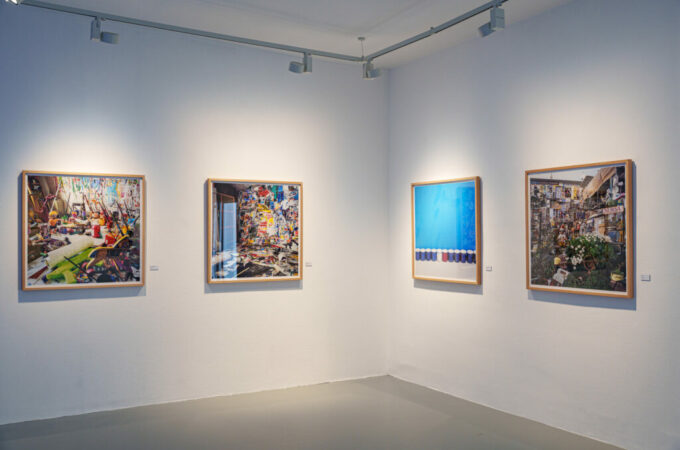
A row of blue pigment jars against a blue surface. Torn posters layered across a studio wall like fragments of urban memory. A table crowded with paint, toys, brushes, books, paper and the beautiful chaos of creation. Before the artists themselves appear, their worlds are already speaking.
This is the quiet power of Ateliers et portraits d’artistes, Jean-Marie del Moral’s exhibition at the Centre d’Art Contemporain Bouvet Ladubay in Saumur. Bringing together 107 photographs devoted to the studios and portraits of some of the most celebrated artists of the past century, the exhibition offers something far more intimate than a survey of artistic fame. It offers access.
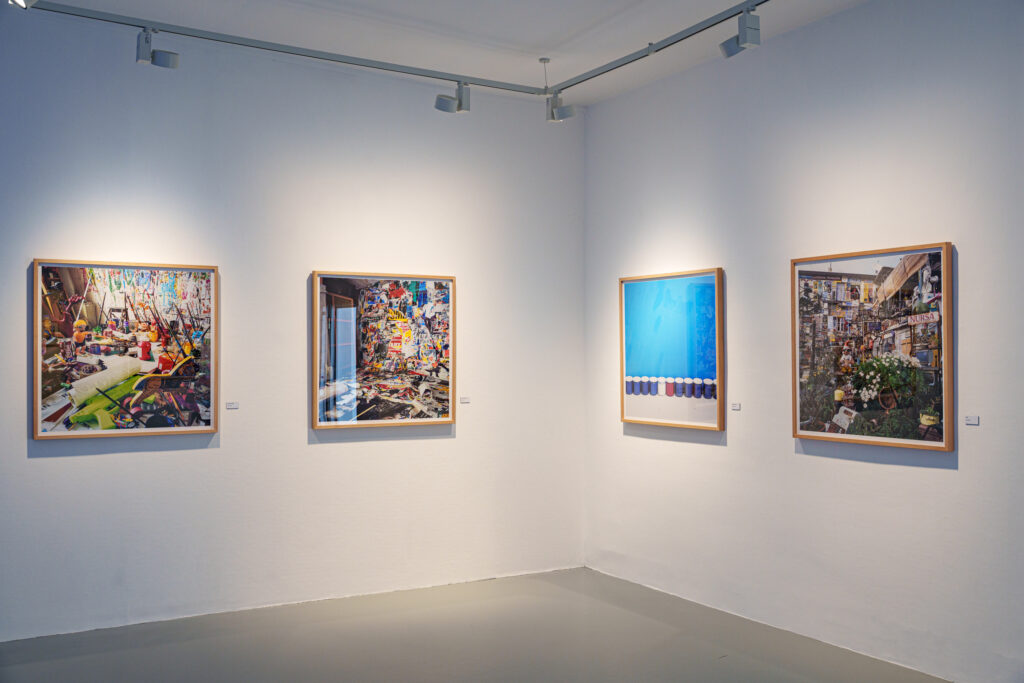
Bouvet-Jean-Marie del Moral © Christophe Gagneux
The names featured throughout the exhibition are impressive – Joan Miró, Antoni Tàpies, Pierre Soulages, Roy Lichtenstein, Joan Mitchell, Miquel Barceló, Robert Combas and Zao Wou-Ki among them. Yet celebrity is never the subject. The real protagonist is the studio itself.
Del Moral has spent decades photographing the places where art is born. Rather than focusing solely on artists, he turns his lens toward the environments that shape their work: the rooms, objects, notes, colours, tools and fragments of daily life that exist long before a painting reaches a gallery wall. In his photographs, the studio becomes a living archive of thought and process.
Born in France to Spanish Republican exiles, del Moral began photographing at a young age before documenting social movements in Europe and later discovering American Abstract Expressionism. A defining moment came in 1978 when he met Joan Miró in Palma de Mallorca. Entering the artist’s studio for the first time, he encountered what Miró described as a “grotto” – a protected world where ideas could evolve away from public view.
That experience shaped an entire career.
The Studio as an Unconscious Self-Portrait
The central idea behind the exhibition is both simple and profound: a studio reveals what a portrait cannot.
A face can be composed. A public image can be carefully controlled. But a studio exposes habits, rituals, obsessions and private references. It reveals repetition, discipline, doubt and experimentation. A note pinned to a wall, a jar of pigment placed in the same spot for years, a brush abandoned mid-gesture – these details become evidence of a creative life.
Del Moral has often described his work as closer to a personal diary than an encyclopaedia of art history. Across hundreds of artists photographed over several decades, he has never sought completeness. Instead, he focuses on the particular. This room. This table. This light. This person.
Nowhere is this more evident than in the exhibition’s opening galleries.
The atmosphere of Jacques Monory’s studio emerges through a near-monochromatic universe of blue pigment jars and blue surfaces. The image is restrained, almost minimal, yet emotionally charged. Blue becomes more than a colour. It becomes a state of mind.
Nearby, Jacques Villeglé’s studio presents the opposite sensation. Torn posters cover walls and floors in overlapping layers of text, colour and urban debris. Disorder becomes language. The studio feels alive, constantly shifting and rewriting itself.
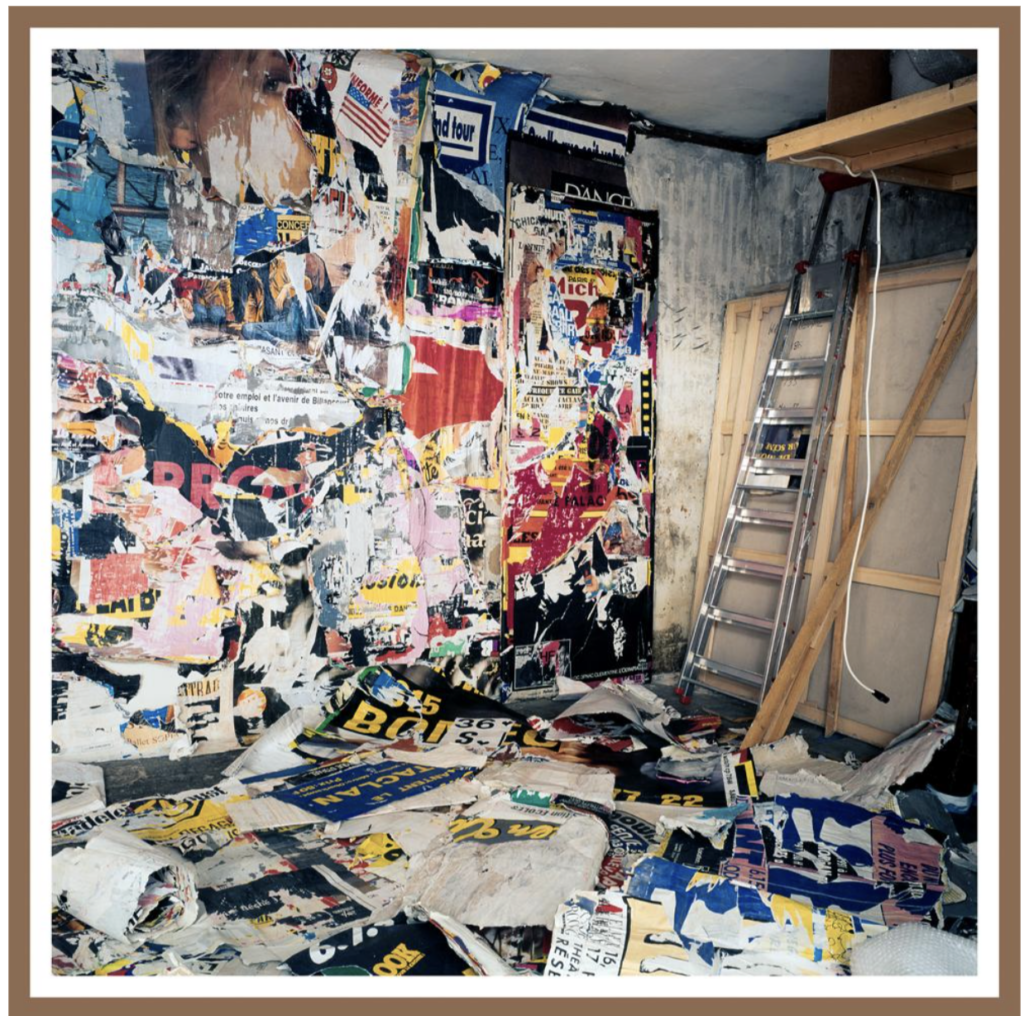
Jacques Villeglé’s studio, Paris, 1993. Photographed by Jean-Marie del Moral
Robert Combas pushes this energy even further. His workspace overflows with brushes, books, toys, paint and strange figurines. The image borders on excess, yet the accumulation feels entirely purposeful. The room appears to think at the same pace as the artist.
Together, these photographs dismantle the myth of artistic perfection. Del Moral is not interested in polished narratives of genius. He is interested in process, in the traces artists leave behind and in the environments that quietly shape their work.
Photography as Presence
Trust is at the heart of del Moral’s practice.
The artists he photographs are rarely strangers. Many are friends, collaborators or long-term acquaintances. The resulting images never feel intrusive. They feel invited.
This distinction is crucial. Del Moral has often spoken of photography not as an act of taking, but as an act of giving. His photographs emerge from observation rather than extraction. They reward patience, attention and familiarity.
In an age defined by endless streams of images, this approach feels remarkably relevant. Del Moral’s work insists on slowing down. It asks viewers to notice the small things – the objects that accumulate over years, the marks left on a wall, the evidence of repeated gestures.
A studio carries time.
Beyond the Artist
One of the exhibition’s most striking observations is that the artist’s presence often becomes strongest when the artist is absent.
Studios change. Paintings leave. Walls are repainted. Lives move on. Yet the room remains as a map of thought and memory.
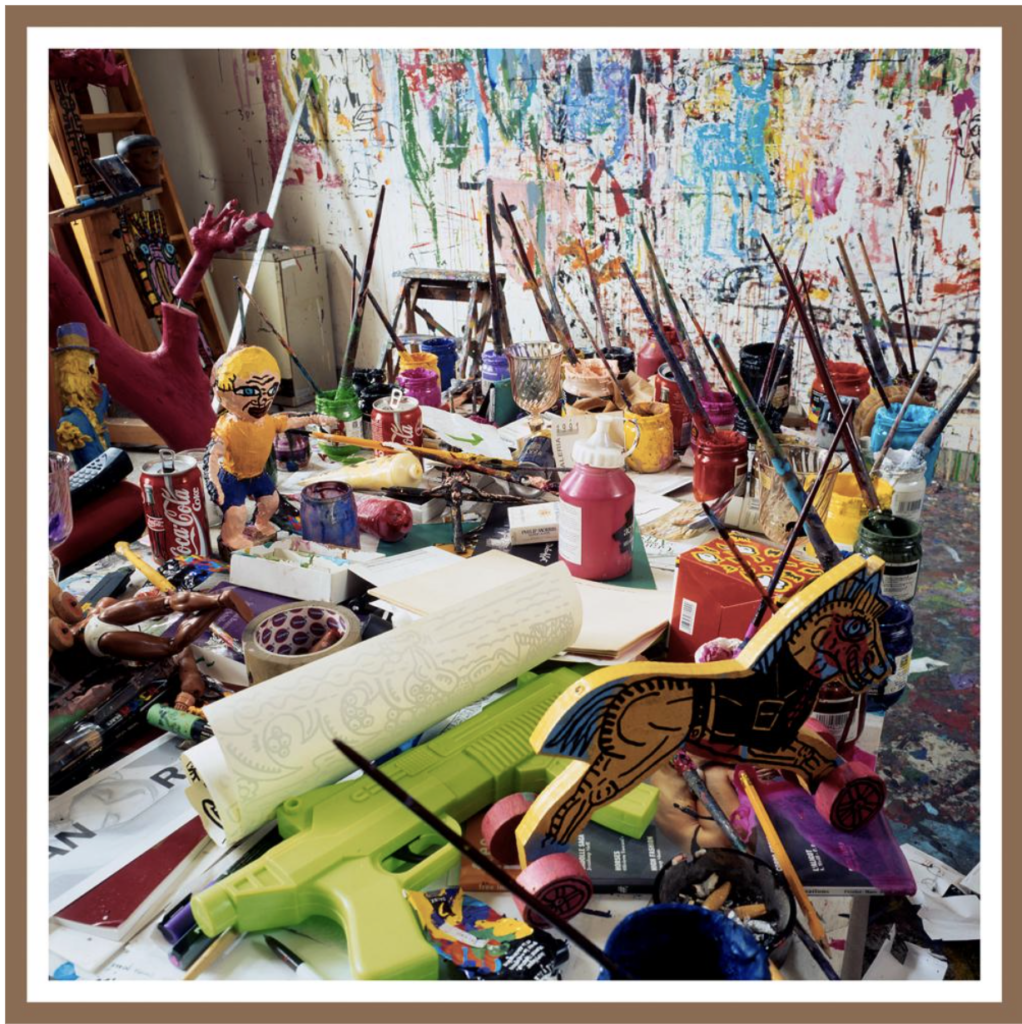
Robert Combas’s studio, Paris, 1993. Photographed by Jean-Marie del Moral.
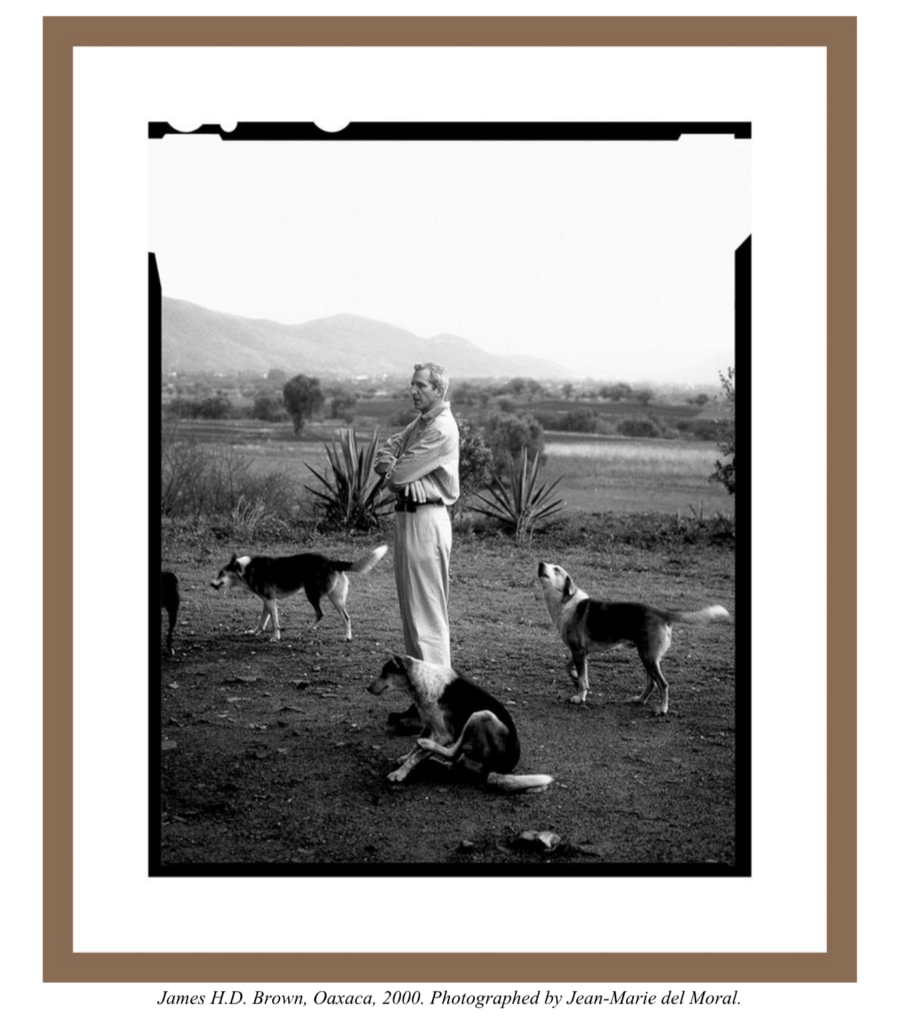
This becomes particularly moving in the photographs of James H.D. Brown, the American artist who divided his life between Oaxaca and Paris. In one image, Brown stands outdoors among dogs on his property. The scene appears deceptively simple, yet it conveys an entire way of life – distance from the art world’s centres, intimacy with landscape and a quiet commitment to daily routines.
Nothing is explicitly stated. The photograph simply allows the viewer to understand.
That restraint may be del Moral’s greatest strength. A successful portrait, in his hands, is never merely a likeness. It is a situation.
The Worlds That Shape Artists
Visitors arriving at Ateliers et portraits d’artistes may expect portraits of famous artists. What they discover instead are rooms filled with clues: a blue jar, a torn poster, a crowded table, a handwritten note, a beloved animal.
These fragments reveal something deeper than appearance.
Jean-Marie del Moral certainly photographs artists. But his true subject is the world that makes artistic creation possible. And in doing so, he reminds us that every work of art begins long before it reaches the public eye – in a room, among objects, within the quiet rituals of everyday life.
Visitor Information
Ateliers et portraits d’artistes
Photographs by Jean-Marie del Moral
Dates: May 30 – November 1, 2026
Venue: Centre d’Art Contemporain Bouvet Ladubay
Saint-Hilaire-Saint-Florent, Saumur, France
The exhibition brings together 107 photographs dedicated to the studios and portraits of 56 internationally acclaimed artists, including Joan Miró, Antoni Tàpies, Pierre Soulages, Roy Lichtenstein, Joan Mitchell, Miquel Barceló, Robert Combas and Zao Wou-Ki.
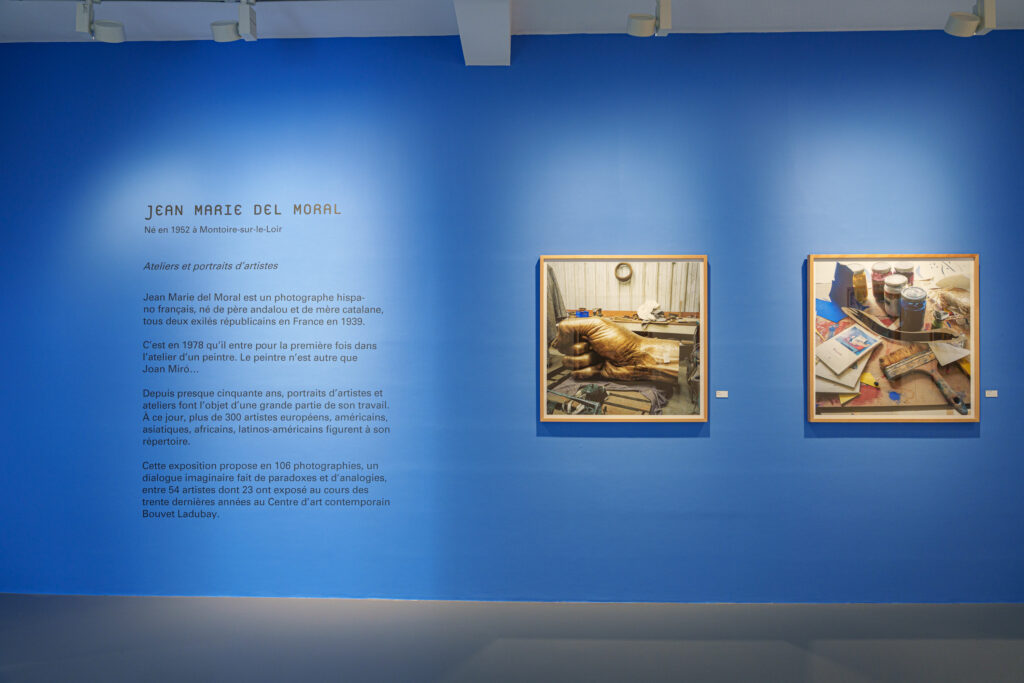
Rather than focusing on celebrity, Jean-Marie del Moral invites visitors into the intimate spaces where artistic creation takes shape. Across eight exhibition rooms, studios become portraits, revealing the habits, rituals and hidden worlds behind some of the most influential artists of the modern era.
Opening Hours & Information:
For the latest visitor information, opening hours and ticket details, visit:
Bouvet Ladubay Contemporary Art Centre
Address:
Centre d’Art Contemporain Bouvet Ladubay
Saint-Hilaire-Saint-Florent
49400 Saumur, France
Tags: art collector, art exhibition, art lovers, art travel, Art World, artist studio, Bouvet Ladubay, contemporary art, contemporary photography, creative process, cultural travel, European art, fine art photography, France exhibitions, French art, Jean Marie del Moral, Joan Miro, Joan Mitchell, luxury culture, Miquel Barceló, museum exhibition, must see exhibition, photography exhibition, Pierre Soulages, Robert Combas, Roy Lichtenstein, Saumur, visual arts, What We Adore Magazine, Zao Wou-Ki
Recommended
-
Paris Is Having an Art Affair – And Almine Rech Is at the Centre of ItOctober 13th, 2026
-
FROM MIRÓ TO PICASSO: PARIS AFTER DARK AT MASH 2026October 13th, 2026
-
ONE TO WATCH AT DESIGN MIAMI PARIS: JEAN TOURET’S L’ÂGE DE FERSeptember 30th, 2026
-
ART BASEL PARIS 2026: THE REAL SHOW EXTENDS FAR BEYOND THE GRAND PALAISSeptember 21st, 2026
-
THE ART EXHIBITION TO SEE IN PARIS THIS OCTOBER: TRACEY EMIN AT WHITE CUBESeptember 21st, 2026