_________________
The Audemars Piguet Chronograph That Refuses to Be Forgotten
__________
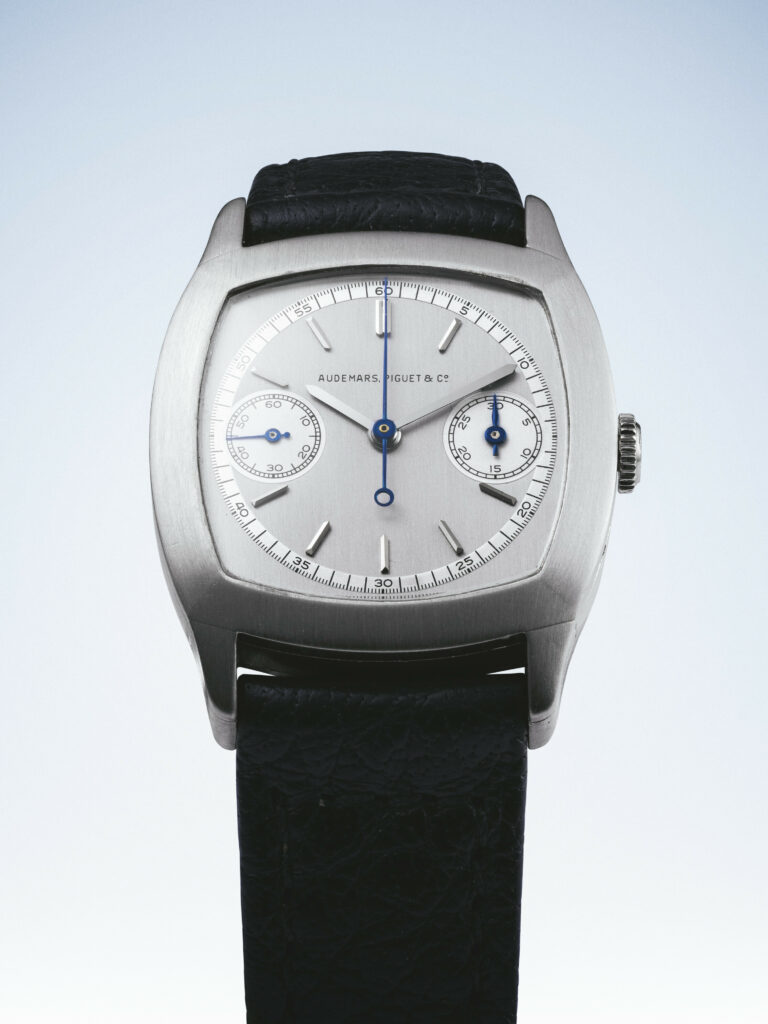
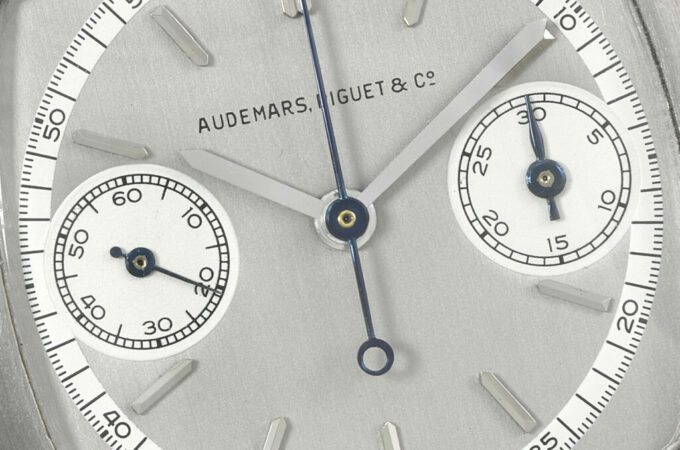
Audemars Piguet a single-button chronograph wristwatch, Coussin Tortue model, no. 41,849, made circa 1930, estimate CHF200,000-400,000
By Shari Inessa
In an industry driven by constant release, visibility, and velocity, true rarity has become almost abstract.
And then, something like this appears.
This spring in Geneva, Christie’s will present an Audemars Piguet single-button chronograph from circa 1930 – a watch that has spent over nine decades outside the market, preserved within the same family since its original sale in 1935. It is not a rediscovery in the usual sense. It is a re-emergence.
Timed to headline the Rare Watches auction on May 11 at the Four Seasons Hotel des Bergues, the “Coussin Tortue” model no. 41,849 arrives with an estimate of CHF 200,000 to 400,000. Yet its significance lies less in valuation than in context. This is not just an early chronograph. It is part of a moment when the wristwatch itself was still being defined.
In 1930, Audemars Piguet produced just six movements for its first chronograph wristwatches. Six attempts at translating a complication traditionally reserved for pocket watches into a wearable form. Of those, only a handful were ever completed and sold. Today, only two examples are confirmed to have survived.
This is one of them.
___________
An Object Ahead of Its Time
What is striking is not only its rarity, but its clarity.
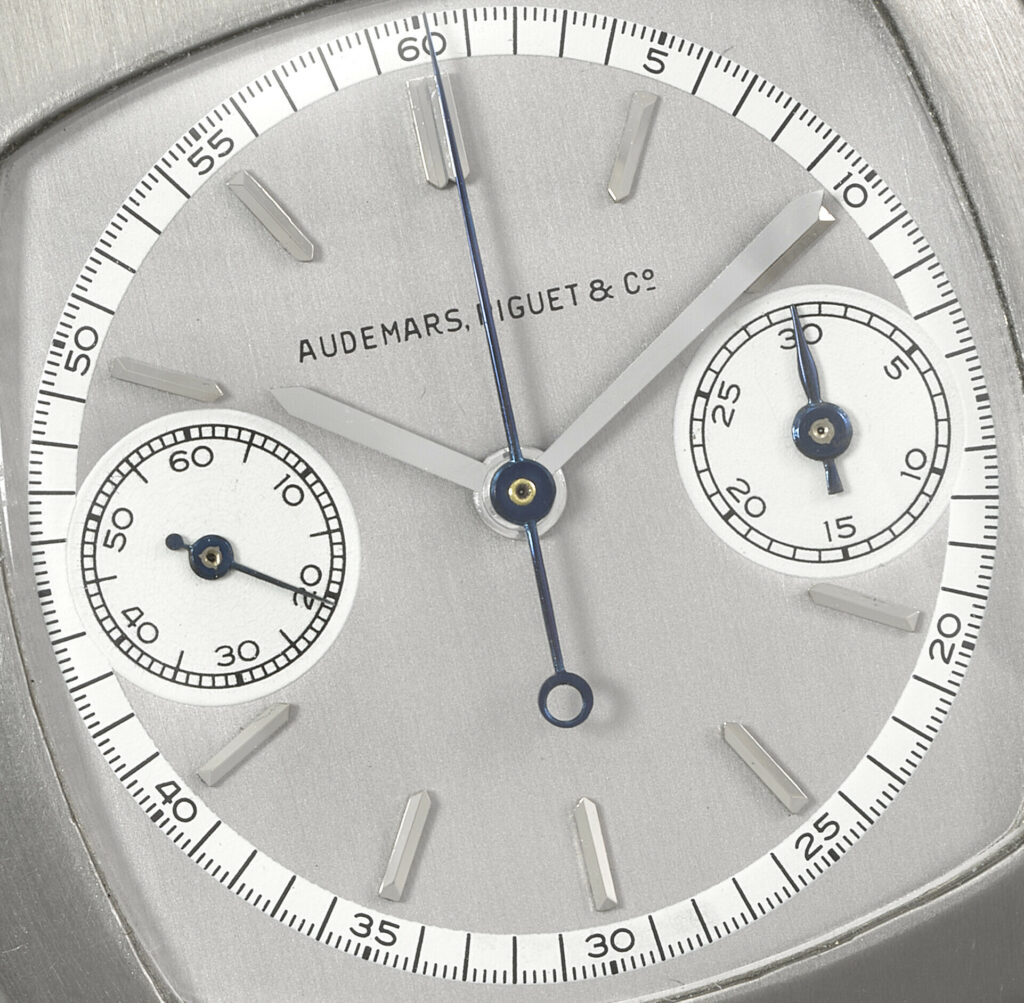
The case, a brushed platinum cushion form made by Wenger, reflects the modernist language of the early 20th century – architectural, reduced, almost severe. It avoids ornament entirely. Instead, it frames a two-tone dial in grey and white, executed in gold, with a precision that feels unexpectedly current.
There is no nostalgia here.
Only intent. The defining feature is its monopusher construction. A single button integrated into the crown controls the chronograph’s full cycle – start, stop, reset. Today, this mechanism is appreciated for its elegance. In 1930, it was a technical and conceptual leap. Complexity condensed into one gesture.
This is where the watch shifts from object to statement.
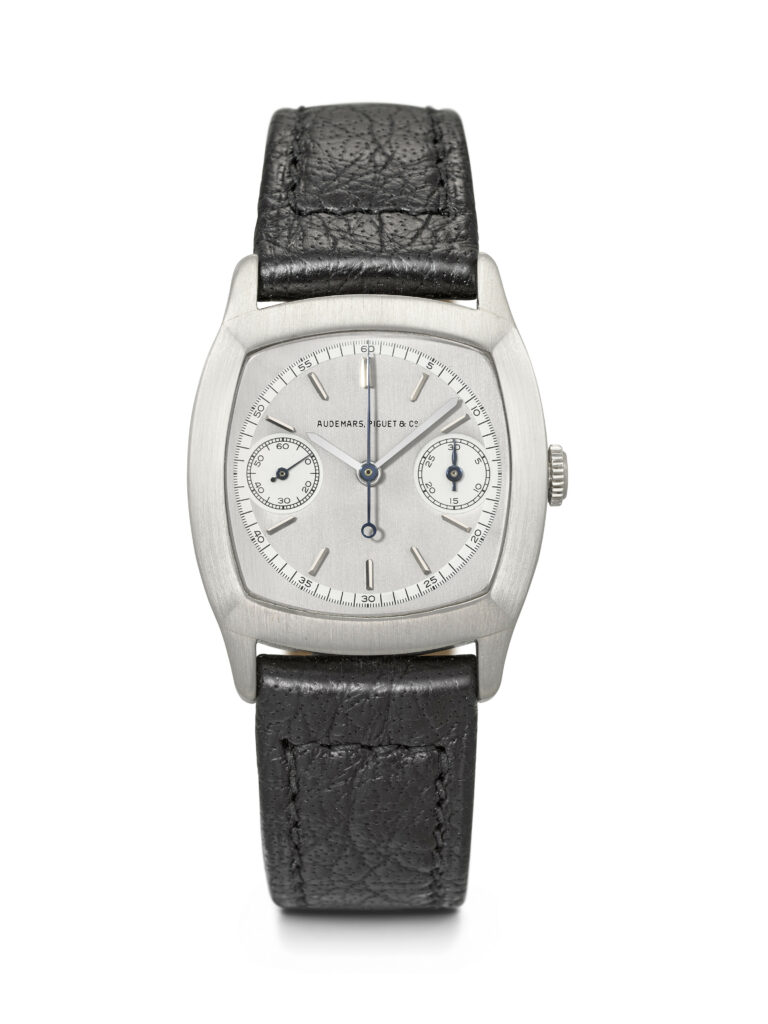
Because Audemars Piguet was not operating within industrial logic at the time. Production was limited to such an extent that, between 1930 and the 1980s, the Maison created just over 300 chronograph wristwatches in total. Numbers that stand in stark contrast to contemporary expectations of scale.
This was watchmaking without compromise. Without urgency. Without the need to explain itself.
Before its presentation at auction, the watch returned briefly to the Vallée de Joux – to the Musée Atelier Audemars Piguet. Not as a spectacle, but as a form of continuity. A way of placing the object back into the landscape that shaped it.
________________
It is a detail that matters.
Because this watch has not been circulating. It has not been traded, exhibited, or reframed through market narratives. It has simply existed – quietly, intact, outside of time. And that is precisely what gives it weight now. In a market saturated with references to heritage, this is the real thing.
Not revived. Not reproduced. Not reinterpreted.
Original.
The significance of this piece lies in its resistance – to trends, to exposure, to reinvention. It did not evolve with the market. It waited for it.
And in doing so, it becomes something increasingly rare:
Not just a collector’s object –
but a point of reference.
Discover more at www.christies.com